Good to know
Frequently Asked Questions About Tooth Fractures
+How do I know if my tooth is fractured if I can’t see anything?
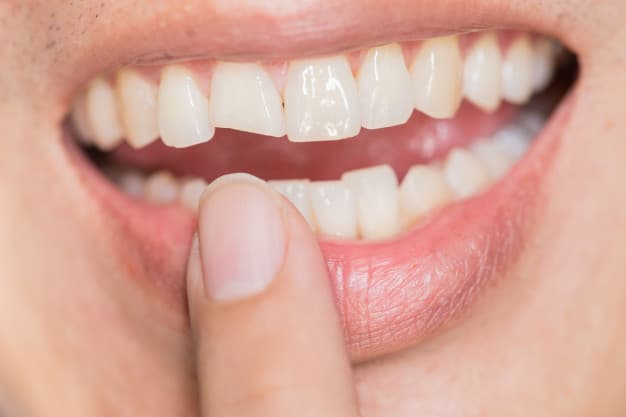
Not all fractures are visible.
Many cracks occur beneath the surface or along the biting surface where they are difficult to detect without clinical examination. Patients often describe symptoms such as:
sharp pain when biting or releasing pressure
sensitivity that comes and goes
discomfort when chewing certain foods
These symptoms are often more reliable than visual signs.
At Melbourne Dental Family Care, we assess fracture patterns using a combination of clinical testing and imaging where appropriate. Early detection can significantly influence treatment options.
+What causes a tooth to fracture if I didn’t have an accident?
Fractures are commonly related to cumulative stress rather than a single event.
Contributing factors include:
long-term grinding or clenching
large existing fillings weakening the tooth
repeated chewing pressure
sudden biting on hard objects
Over time, these forces create microscopic cracks that can gradually expand.
Our dentists often explain that fractures are not always “accidents” — they are frequently the result of structural fatigue.
+Is a cracked tooth always painful?
No.
Some fractures remain asymptomatic in the early stages. Pain often depends on how deep the crack extends and whether it involves the inner structures of the tooth.
In some cases, patients experience:
intermittent discomfort
sensitivity only when chewing
no pain at all initially
This is why fractures can be easily overlooked until they progress further.
+Can a fractured tooth heal on its own?
No.
Unlike bone, tooth structure does not regenerate or heal once cracked.
Without treatment, a fracture may:
deepen over time
extend under chewing pressure
eventually reach the nerve
Early stabilisation is important to prevent progression.
+What are the treatment options for a fractured tooth?
Treatment depends on the depth and extent of the fracture.
Options may include:
monitoring (for very minor cracks)
bonding or fillings
crowns to protect the tooth
root canal treatment if the nerve is affected
extraction in severe cases
Our dentists evaluate structural integrity rather than just symptoms when determining the appropriate approach.
+When is a crown needed for a fractured tooth?
A crown is usually recommended when the tooth has lost structural strength.
If a crack compromises the ability of the tooth to withstand normal biting forces, a crown helps to:
distribute pressure evenly
prevent further splitting
stabilise the remaining structure
Crowns are often used as a protective measure rather than a last resort.
+What happens if I ignore a cracked tooth?
Cracks tend to worsen over time.
Ignoring a fracture may lead to:
increased pain
deeper structural damage
infection of the nerve
eventual tooth loss
What starts as a minor crack can progress into a situation requiring root canal treatment or extraction.
Early management is usually simpler and more predictable.
+Can teeth grinding cause fractures?
Yes, and it is one of the most common causes.
Grinding places repeated stress on teeth, especially during sleep when the force is uncontrolled. Over time, this can create small cracks that gradually expand.
If grinding is identified, Our dentists may recommend a night guard to reduce further damage.
Addressing the cause is as important as treating the fracture itself.